Palm Kernel Oil Made Right.
Our Promise to You.
Innovation & Efficiency
Combining modern processing techniques with smart resource management to deliver premium palm kernel oil products.
Guaranteed
Quality & Consistency
We guarantee every drop of our palm kernel oil meets rigorous specifications for purity, taste, & reliability.
Locally & Sustainably
Proudly produced in Nigeria, supporting our communities in over 10 states, building locally and responsibly.
Honesty & Integrity.
We do what we say we will do.
It’s simple, and it’s the only way we know how to work.
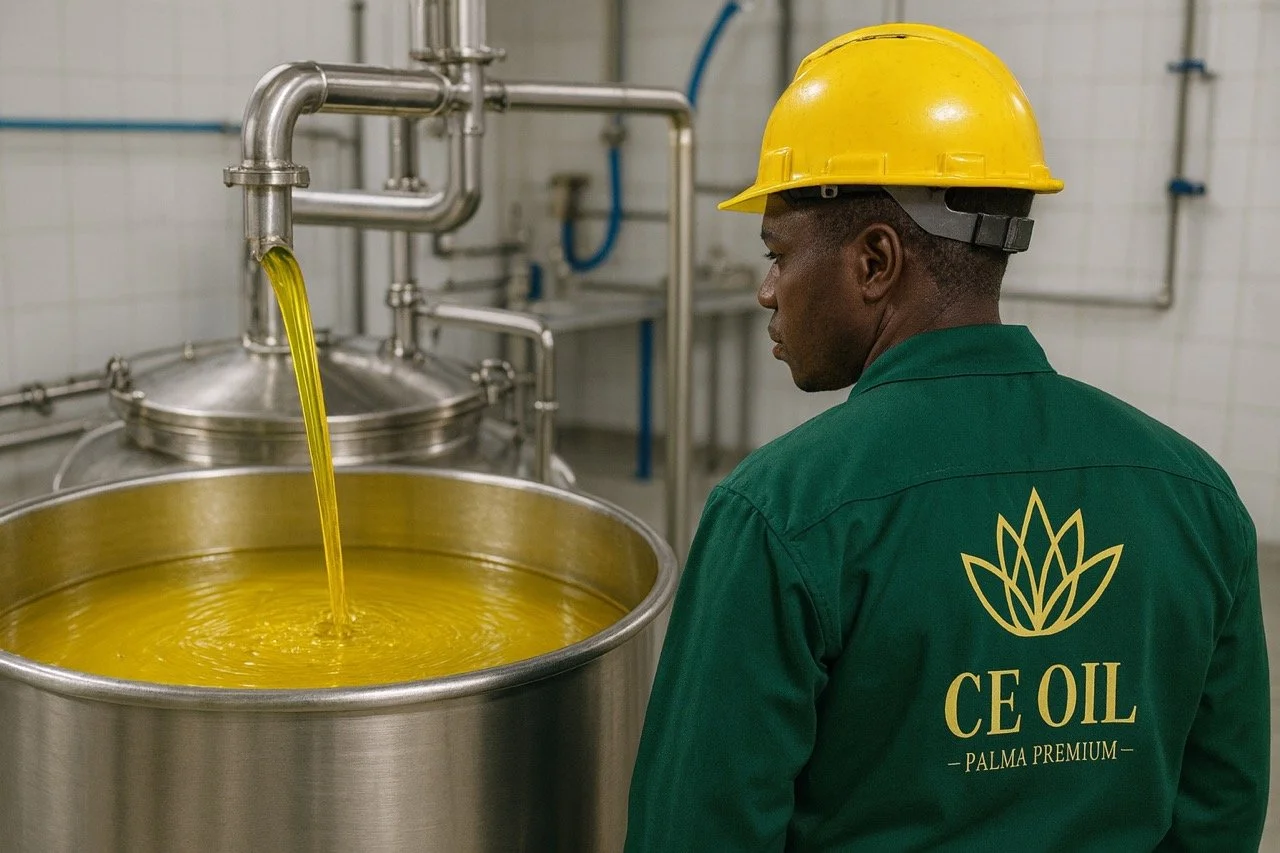
Redefining palm kernel oil with a commitment to premium quality. Sourced from the finest plantations in Nigeria, our oil is carefully extracted to preserve its purity, richness, and nutritional value. Every batch meets the highest industry standards for colour, clarity, and freshness, making CE Oil a symbol of excellence. Whether for cooking, food production, or industrial use, our palm kernel oil delivers superior taste and performance.
It’s Palm Kernel Oil. But Premium.
Sustainability as a point of pride.
-
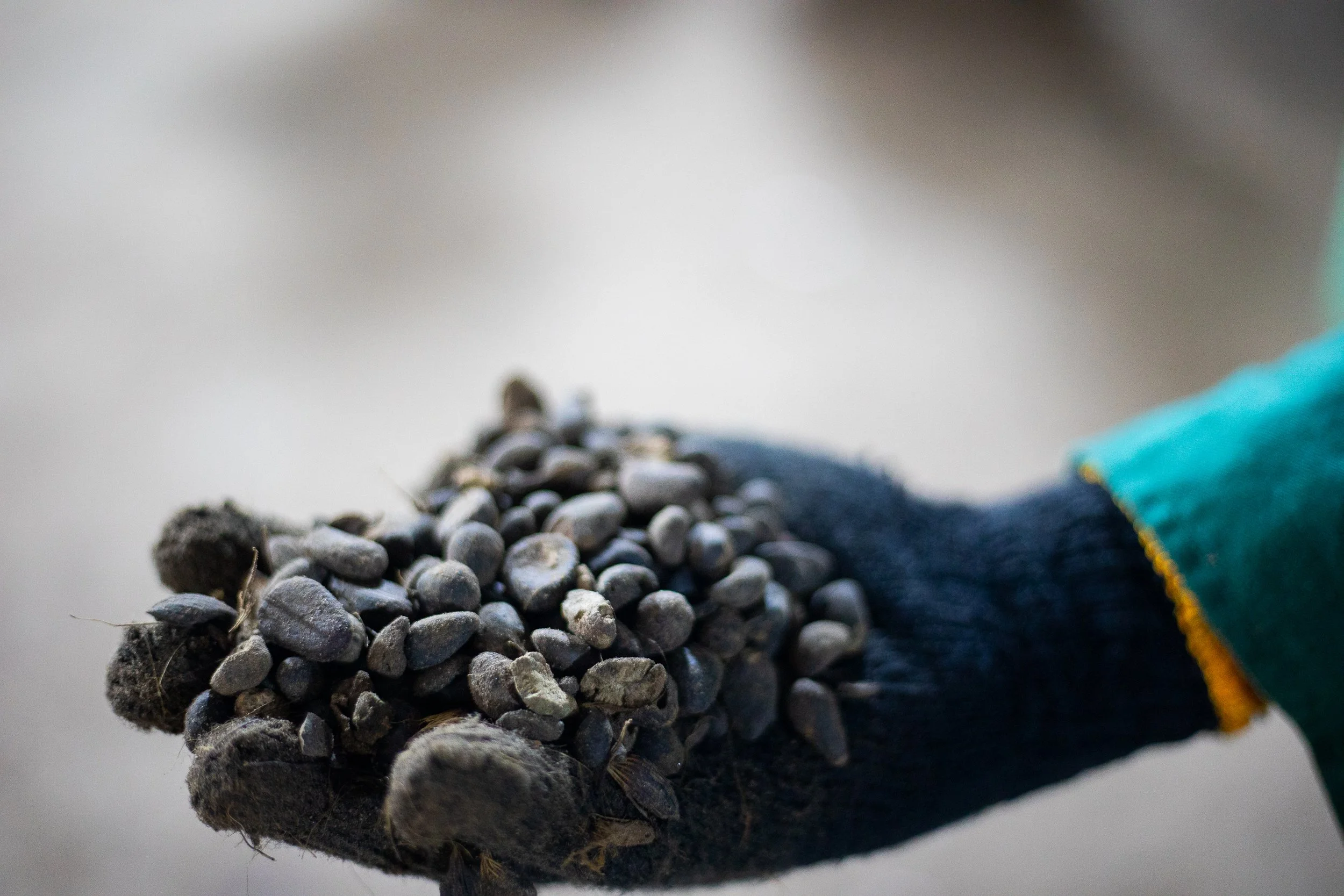
CE Oil sources its palm kernels exclusively from over 1,800 smallholder farmers across ten Nigerian states, forming a decentralised but traceable network of agricultural partners. These independent suppliers rely on palm kernel collection as a primary income stream, and our model is designed to amplify their economic resilience.
All sourcing is guided by strict quality and responsibility standards:
Moisture content must remain under 6–7% to ensure long shelf life and product integrity.
Shell ratio and grading is enforced to minimise waste and maintain efficiency.
Zero tolerance for deforestation-linked sourcing: CE Oil does not procure from areas where recent deforestation has occurred.
We prioritise women-led cooperatives for drying and cleaning, creating targeted impact where it's most needed.
This approach allows us to deliver premium quality oil while embedding equity and sustainability directly into our supply chain.
-
CE Oil is built on a model of sustainability that prioritises local value creation, environmental responsibility, and efficiency at every stage of production.
We source exclusively from smallholder farmers — over 1,800 independent suppliers across 10 Nigerian states — with a strict procurement standard that prohibits sourcing from deforested areas and enforces low-moisture kernel supply (below 6–7%) to reduce spoilage and waste. By focusing on quality at the source, we limit unnecessary processing energy downstream.
Processing takes place locally, using efficient extraction and drying systems designed to minimise environmental impact and retain product quality. We also prioritise women-led cooperatives for kernel drying and cleaning, aligning with broader ESG goals and supporting community resilience.
In logistics, CE Oil supports a decentralised transport network of 45+ independent truck owners, redirecting over ₦1.9B annually into local economies. Our indirect employment model empowers over 600 contract and gig-based workers, expanding the economic footprint of our sustainability strategy.
This end-to-end approach not only ensures long-term viability for our supply chain, it keeps value creation rooted in the communities where the oil is grown.
-
CE Oil supports over 110 direct jobs and an additional 400–650 indirect workers across Nigeria — from kernel pickers and logistics operators to loaders and cleaners. Our procurement footprint reaches 1,500+ households in ten states.
Beyond employment, we inject up to ₦1.9 billion annually into local logistics, support 45+ independent truck owners, and provide steady market access for 1,800+ smallholder farmers. We also prioritise women-led cooperatives in drying and cleaning processes, ensuring the ripple effect of our work reaches often overlooked segments of the community.
-
Because short-term practices cost long-term futures.
Sustainability protects the long‑term viability of the industry and the communities that depend on it. If sourcing destroys land, exploits labour, or drains local economies, the supply chain collapses and the product loses its value. Working sustainably keeps farmers in business, keeps land productive, and keeps buyers confident that the oil they purchase is ethical, traceable, and future‑proof.
At CE Oil, we operate in regions where agriculture is both a livelihood and a legacy. Working sustainably for us is an obligation. Unsustainable palm oil extraction has historically contributed to deforestation, soil depletion, and economic imbalance. We believe Nigeria can and must do better.
-
Yes. Our procurement network is decentralised but mapped. Each delivery is tracked back to source through local procurement hubs, allowing us to monitor volumes, quality metrics, and sourcing zones. This ensures full transparency and control over environmental compliance and supplier engagement.
-
The palm oil industry needs a systemic shift from extractive models to regenerative ones.
This means dismantling the assumption that industrial scale must come at the cost of local livelihoods or environmental damage. Companies must prioritise traceable supply chains, fair pricing for smallholders, and enforceable environmental standards, not just certifications for optics.
Real progress will come from investing in decentralised networks, rewarding clean sourcing, and embedding women and rural communities into the value chain — not as labour, but as stakeholders. CE Oil’s approach is rooted in regional sourcing, fair economics, and transparent logistics. The rest of the industry must move in the same direction if it wants social licence to operate.
-
CE Oil is proactively building an operational model that exceeds basic compliance. We are currently designing frameworks for:
Supplier onboarding with traceability audits
Waste reduction metrics
Community reinvestment ratios
ESG-aligned reporting for grant and export requirements
These are aimed at ensuring our long-term competitiveness in both African and international markets as sustainability standards tighten.

So, Let’s Talk Oil.
All enquiries:
info@ceoil.co.uk
CE Oil, Epe Lagos, Nigeria, Ibeju Lekki